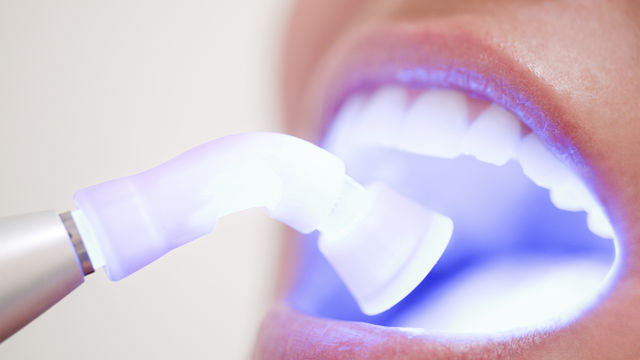
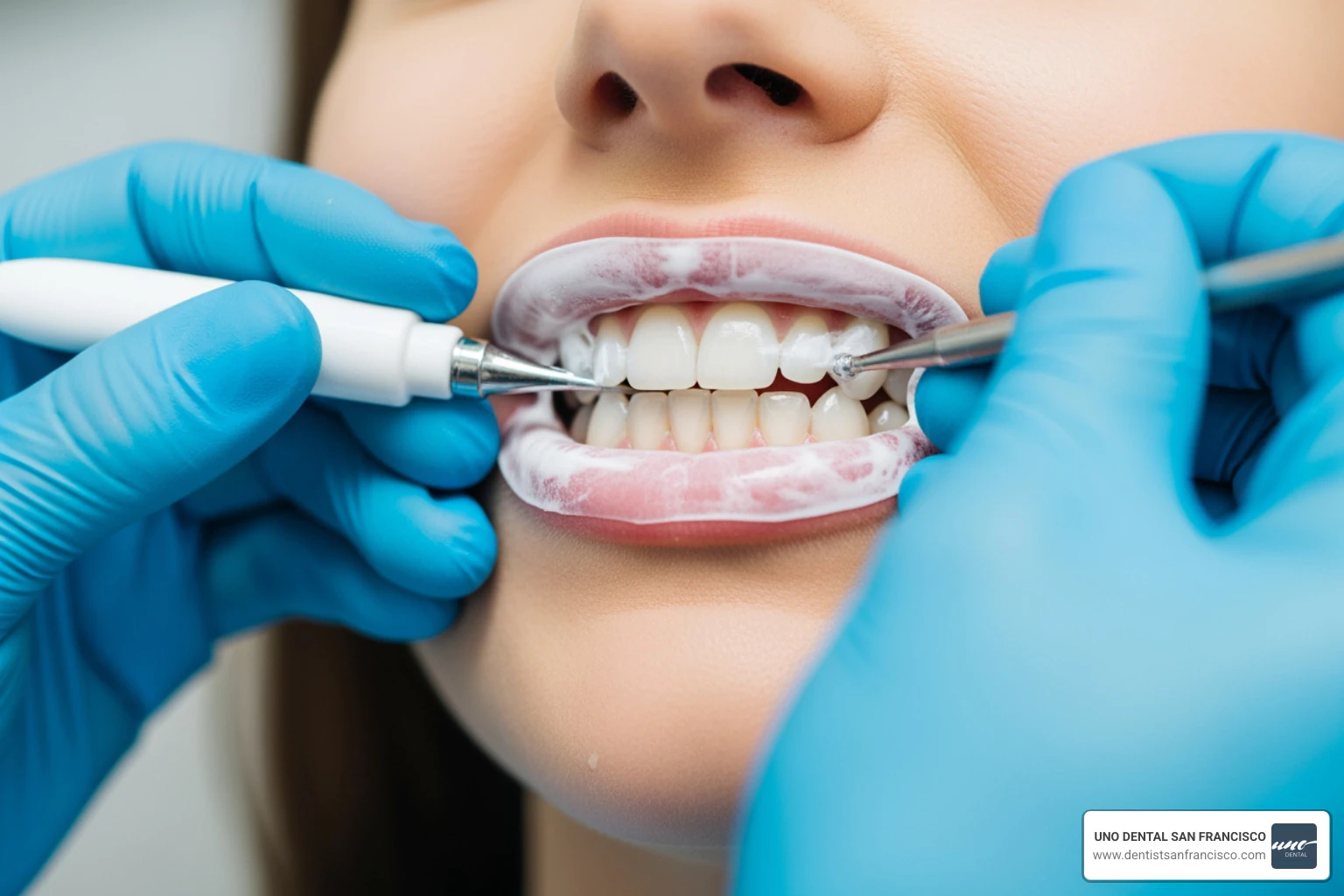
The Truth Regarding Teeth Whitening: Dangers And Negative Effects In-office therapies using a high-concentration lightening solution combined with LED lights can lighten teeth several tones in simply one session. At-home sets with blue light modern technology are less powerful but still provide visible renovations in time. Dentist-prescribed at-home kits consist of reduced focus of lightening agents than workplace therapies. These kits consist of custom-fitted trays and professional-grade bleaching gel. Anybody adverse peroxide (the lightening representative) need to not make use of a bleaching product. You can acquire tray-based teeth-whitening systems from your nearest pharmacy for around $30 or get a custom-fitted tray from your dental practitioner for $150 to $600. All toothpastes remove surface area stains since they include moderate abrasives. Some bleaching toothpastes consist of mild polishing or chemical agents that provide added stain removal performance. Despite how light, each teeth lightening up session a little opens up enamel pores to raise discolorations. Doing this too often suggests enamel does not have time to recoup, making teeth more susceptible to staining and discomfort. Throughout therapy, a peroxide-based gel or bleaching lotion is put on the teeth. Heaven LED light triggers the whitening representatives, increasing the break down of stains. This chemical reaction launches oxygen particles that penetrate the enamel and raise away deep staining. Bleaching gel is a critical element in the effectiveness of LED teeth bleaching, and its formulation commonly consists of hydrogen peroxide or carbamide peroxide for ideal results. When done correctly, teeth lightening is a risk-free and reliable method to enhance your smile. Besides enhancing the appearance of your teeth, teeth bleaching can additionally offer a number of other benefits. Among the most substantial benefits is enhanced self-worth, which can have a favorable influence on all locations of your life. A brighter, whiter smile can make you look younger and extra vivid, helping you really feel much better regarding on your own and boosting your general self-confidence. Threats frequently reported with tooth bleaching consist of enhanced tooth level of sensitivity and moderate gingival inflammation. The degree of these adverse effects is directly related to the concentration of the peroxide bleach element, period of the treatment, and the non-bleach make-up of the product made use of. Tooth sensitivity typically happens at the time of therapy and can last a number of days; gingival irritability begins within a day of the treatment and can also last a number of days. This is not exactly real as some very aggressive regimens can damage the tooth with dehydration and demineralization such that the tooth momentarily appears whiter. They deliver a thin layer of peroxide gel on plastic strips formed to fit Family Dentist onto the buccal surface areas of the teeth. There are a range of white strip items on the marketplace with varying directions. A regular collection of directions are to use the strips twice daily for half an hour for 2 week. Tooth lightening can be seen in several days and this approach can lighten the teeth by 1 or 2 tones. So, possibly you've started checking out teeth bleaching items on shop shelves and questioning if they're safe and able to make a difference. Whether using strips, gels, or trays, adhering to the directions protects against overexposure to bleaching representatives. In-office lightening or dentist-supervised at-home kits provide regulated outcomes and reduce lasting side effects of teeth bleaching. You can minimize this threat by reviewing your sensitivity levels with a dentist before starting a procedure and complying with all aftercare guidelines closely. No, which is why it is essential to speak to your dental professional before choosing to bleach your teeth, as whiteners may not correct all types of staining. As an example, yellow teeth will probably bleach well, brownish teeth may not react as well and teeth with gray tones might not bleach at all.
Effect On Existing Dental Job
- Prior to undertaking any kind of teeth lightening treatment, it's essential to talk to your dental professional to identify the most effective approach for your particular requirements.Consider it as a really gentle sanding that occurs every single time you brush your teeth.Whitening washes consist of oxygen resources such as hydrogen peroxide to respond with the chromogens.In a previous post, we discussed 7 suggestions for brighter and brighter teeth.Our team prepares to help you find a hassle-free time that works for you.
New Individuals And Emergency Consultations Welcome
It's essential to adhere to the recommended standards to prevent destructive your teeth. UV Light Pearly Whites Lightening, specifically, has a higher risk of triggering burns as a result of the heat created. Nonetheless, beware when undergoing teeth lightening, as most of these therapies do not work with treatments such as porcelain veneers. We recommend consulting the dental specialist to secure the teeth and to avoid such unpleasant problems. Whitening remedies have hydrogen peroxide or carbamide peroxide. The harsh chemicals discovered in these gels or remedies can add to redness and inflammation on the affected location. When you whiten your teeth-- whether professionally or with a take-home package-- you're basically using a peroxide-based service that raises spots from the enamel. Because the procedure temporarily opens up the pores in your teeth, light adverse effects are common and typically brief. With in-office bleaching, the lightening item is used directly to the teeth.Does cleaning 2 times a day whiten teeth?
Brushing your teeth won't make them white. Dental experts recommend brushing your teeth twice or more day-to-day to get rid of plaque, stop tooth cavities, and avoid periodontal illness. Nevertheless, routine cleansing or utilizing lightening tooth paste can't substantially whiten teeth.